
Publisher: Sony Interactive Entertainment
Developer: Sucker Punch
Medium: Digital/Physical
Players: 1 (at launch)
Online: No (at launch)
ESRB: M
Ghost of Tsushima was a massive success for Sucker Punch and Sony, boasting millions of sales and even praise from the Japanese government for the portrayal of Tsushima and its history. This game made waves everywhere with its exciting combat, heart-felt story, and absolutely jaw dropping visuals. After the release of the Director’s Cut version for PS5 and PC, which included a brand new Iki Island expansion, it left fans wondering what was next? Would there be a sequel, and if so, would it follow Jin, or someone new? Queue the music, as Ghost of Yōtei was revealed, sparking a whole new wave of conversation.
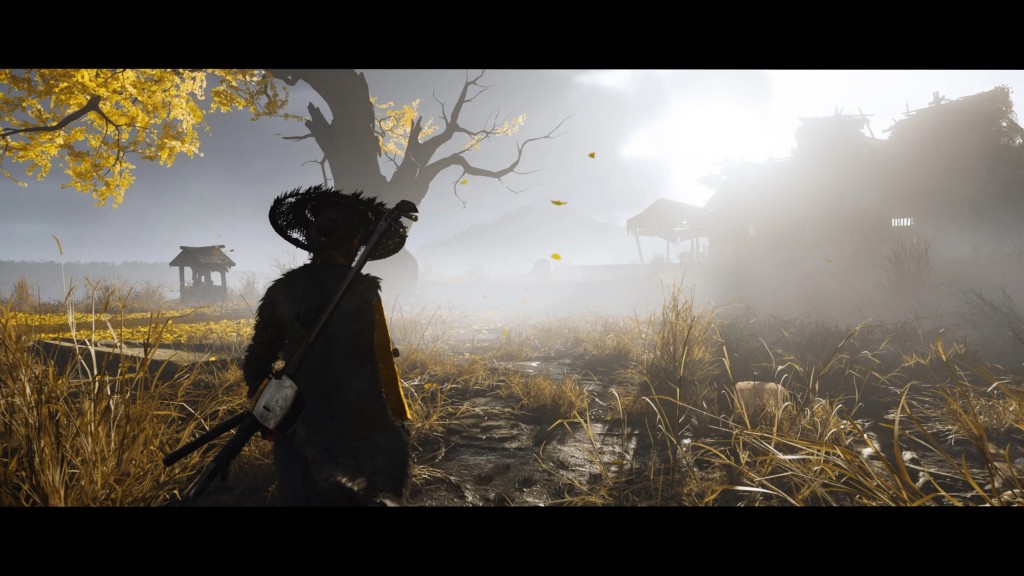
Ghost of Yōtei, while spiritually being a sequel in gameplay, stands on its own. It doesn’t harken back to Ghost of Tsushima’s plot or characters, and instead chooses to introduce a whole new cast and skillset for players to learn about and get familiar with. For starters, our new main character, Atsu, is more aggressive and violent than Jin. Whereas Jin fought with himself to maintain his honor as a Samurai and not delve too deep into the “Ghost” ideology (at least at the start), Atsu craves blood and revenge. For a large portion of the game, though, this does sometimes make Atsu come across very shallow and one-sided compared to Jin’s internal struggle. Driven by the death of her parents, she hunts down the terrifying Yōtei Six. Growing up as a mercenary and a lone wanderer, Atsu learned to fight to survive, and this shows up through the point we gain control and the story begins. Upon finally meeting the first of the Yōtei Six, the Snake, Atsu is impaled through the chest with a katana. Somehow, she survives, standing up and being crowned a Ghost. However, you quickly learn she’s not just a Ghost, she’s an Onryo, a spirit of vengeance. This sparks the rest of the game’s plot into motion.
Unlike Ghost of Tsushima’s more linear approach to its plot, Ghost of Yōtei tackles it with a bit more of an open-ended solution. You’re given the list of the Yōtei Six and told to hunt them down in the order you choose. This might cause some skepticism given how open-ended stories usually end up being piecemeal and not really cohesive, but Sucker Punch manages to avoid this excellently. You can tackle each member of the Yōtei Six as you wish, and each story beat you hit along the way all blends fairly well into other ones regardless of order. I started off with the Oni, but I made progress in some of the others before finishing up the Oni’s story path. Amazingly, the story seemed to evolve naturally through this regardless, which is a huge plus for games that usually try to be this open. Sucker Punch really nailed the freedom of choice in Ghost of Yōtei.
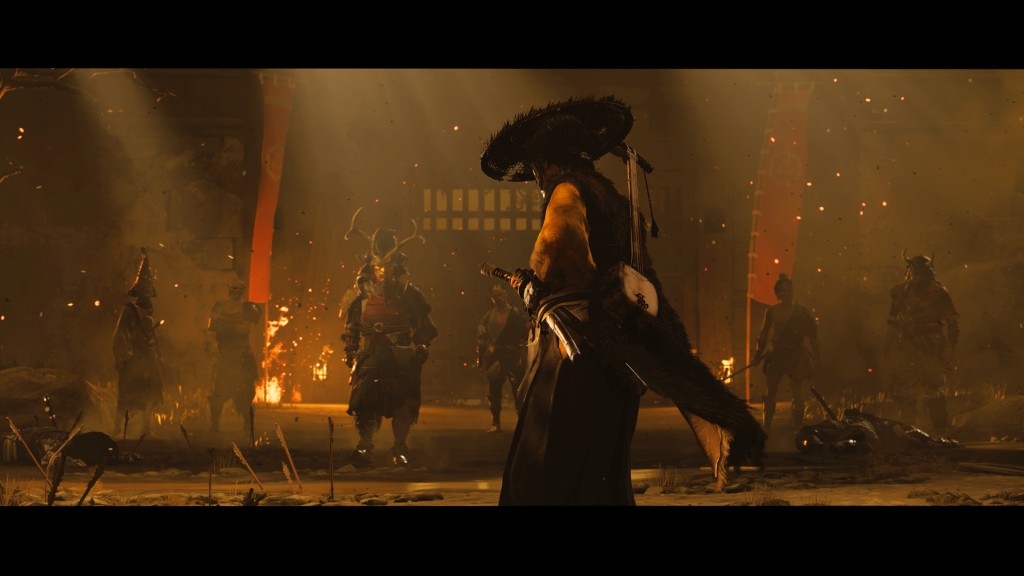
During the story, you’ll meet a whole new cast of characters to help you upgrade your gear, let you buy customization options, maps to find secrets, etcetera. You don’t even always need to find them either, because with the new camp system, you’ll have them just show up wherever you are. This feature isn’t even something I would have thought about either, but it’s a very welcome convenience. Each person you meet seems to have their own backstory and you’ll unlock sidequests for these characters as you progress, letting you learn more and more about them and what they’re fighting for. It’s hard to tell if the size of the world is smaller or larger than Tsushima, as this takes place throughout most of Hokkaido, but it definitely feels more fleshed out and more “alive”. Towns have NPCs gossiping about the happenings and whatnot and sometimes change how they speak about Atsu as you progress.
Ghost of Yōtei’s combat is fairly similar to Tsushima in concept, but the actual details are more fleshed out and you’re given more options to express yourself while dueling. For instance, Ghost of Tsushima gave Jin 4 different stances to use based on the opponent type he was facing. Atsu, on the other hand, learns how to use several different weapons, including dual katana, the odachi, the yari, and more. Obviously each weapon still has its rock-paper-scissors of what it does better against and what it’s weaker against, but they feel a bit more generalized so you can use your favorite weapon more often than not. Personally, I’ve had a blast tearing through enemies with the odachi. You’ve also got a whole set of throwables to use, like throwing pocket sand at enemies to daze them, bombs to set them ablaze, and more. Atsu is absolutely designed to be a more aggressive, versatile fighter, and I’d wager she feels better to pilot than Jin. You even start with some of the same stuff Jin had, such as starting with the grappling hook you had to progress in the Tsushima story to acquire for Jin. It really does feel like an evolution from the previous game, so nothing but praise to Sucker Punch for how they handled going from Jin Sakai to Atsu. Additionally, Atsu gets a wolf companion that will periodically show up to assist Atsu in her endeavors, whether via assassinations or general combat. I’d wager my one gripe with the change to Atsu’s progression is tying her upgrades to shrines located throughout the world instead of “leveling up” through completing sidequests and main story.
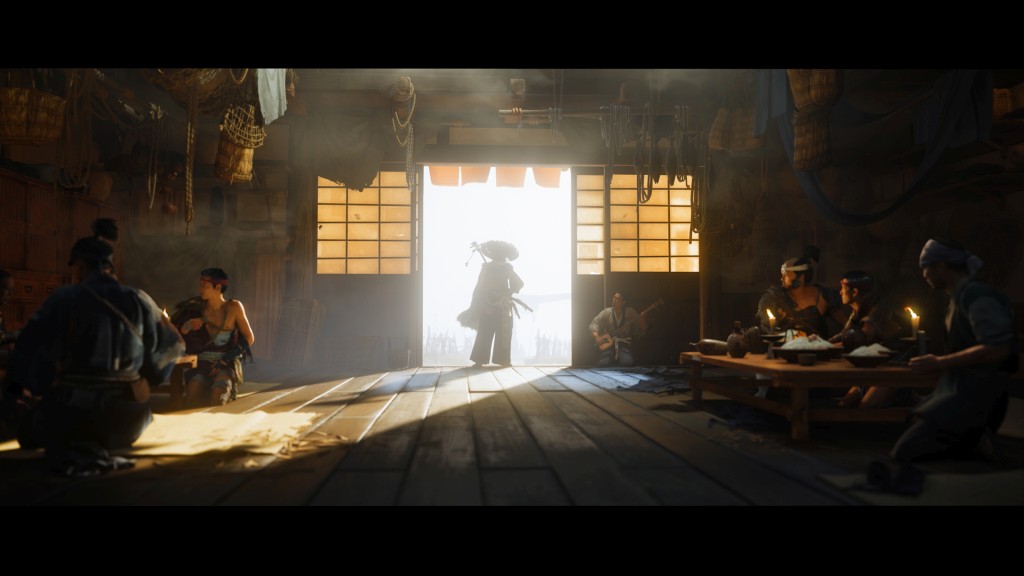
The combat, the world, the visuals, and everything in between are all good, but what about the exploration and the extra content? Exploration is definitely more encouraged, especially with most of your unlockable armors being tied to all sorts of random excursions and sidequests. As mentioned previously, you can acquire “maps” from an NPC all over the place. These maps will have you find the matching spot on your map, and once you do, it unveils the location of something like a hot spring, a shrine for you to pay respects to, fox dens, and more. This does mean that nearly every single upgrade you can acquire necessitates exploration, which can be tedious if you’re going for everything. At least the maps help you find locations of interest you may have missed, cutting through some of that slog.
One of the big extras that Ghost of Tsushima toted was the Kurosawa mode, making the game playable as if it were a black and white samurai film from years ago. That mode makes its return, as do two more modes I won’t spoil in this review, but are incredibly neat to see in Ghost of Yōtei. One of the new “modes” is based on another filmmaker, and the other an anime producer of some very notable works. One of these is another camerawork-focused mode, while the other just changes the soundtrack.
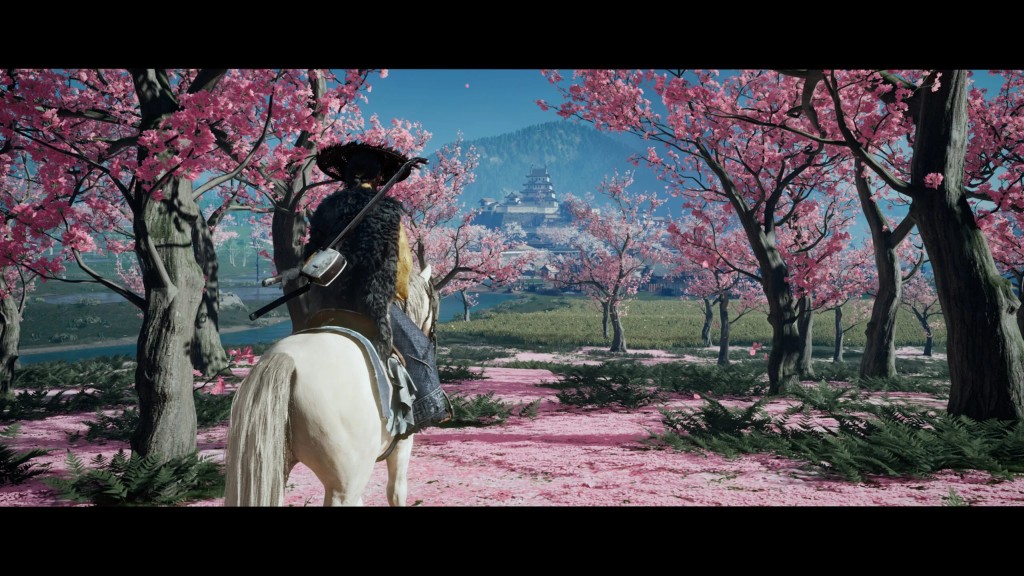
Ghost of Yōtei isn’t a full blown sequel, but I would consider it more of an “evolution” of Ghost of Tsushima’s foundation. It improves on a good bit of Tsushima’s framework to make it more engaging and even more fun, which is an impressive achievement. It’s not a huge improvement, because it’s hard to improve on something that was already so solid the first time, but it is exactly what you’d ask for as a successor. A new region of Japan, a new protagonist with an interesting background, kickass combat, and an overall complete package. Whether Yōtei will get an expansion or extra content outside of the already announced “Legends” mode, I have no idea, but as it stands, Ghost of Yōtei is a great experience deserving of your undivided attention, especially if you enjoyed Jin Sakai’s journey in Ghost of Tsushima. Sucker Punch have done it again and released a powerhouse of the PS5’s roster.
Note: Sony Interactive Entertainment provided us with a Ghost of Yōtei code for review purposes.