
Also On: PS5, Xbox Series X, Switch
Publisher: Bandai Namco
Developer: Rengame
Medium: Digital/Pysical
Players: 1-4
Online: Yes
ESRB: E
I consider myself someone who practices filial piety, but if I had a father like the King of all Cosmos…I’d be inclined to leave any attempts of contact not reciprocated. Even when trying to complete a simple task such as house cleaning, the ditzy father of The Prince is distracted by a random scroll, opting to play with his discovery. At the crescendo of his twirling routine he launches the scroll into the heavens where it smashes the planet Earth and the scroll opens absorbing the contents of the universe. Realizing his folly he hoists the task of restoring the cosmos to his son (and cousins) and thus you have to go back through the past and roll up the memories to restore the cosmos.
Aside from the remakes for of the first two games in the Katamari Franchise, it’s been a while since we’ve had a console title in the series (Are we counting the tvOS game Katamari Damacy Rolling Live) and what’s stranger is Bandai Namco switched developers on Once Upon a Katamari giving the reins to a studio name Rengame which may or may not be an offshoot or collaborator of the studio that developed the Reroll games (Monkeycraft).
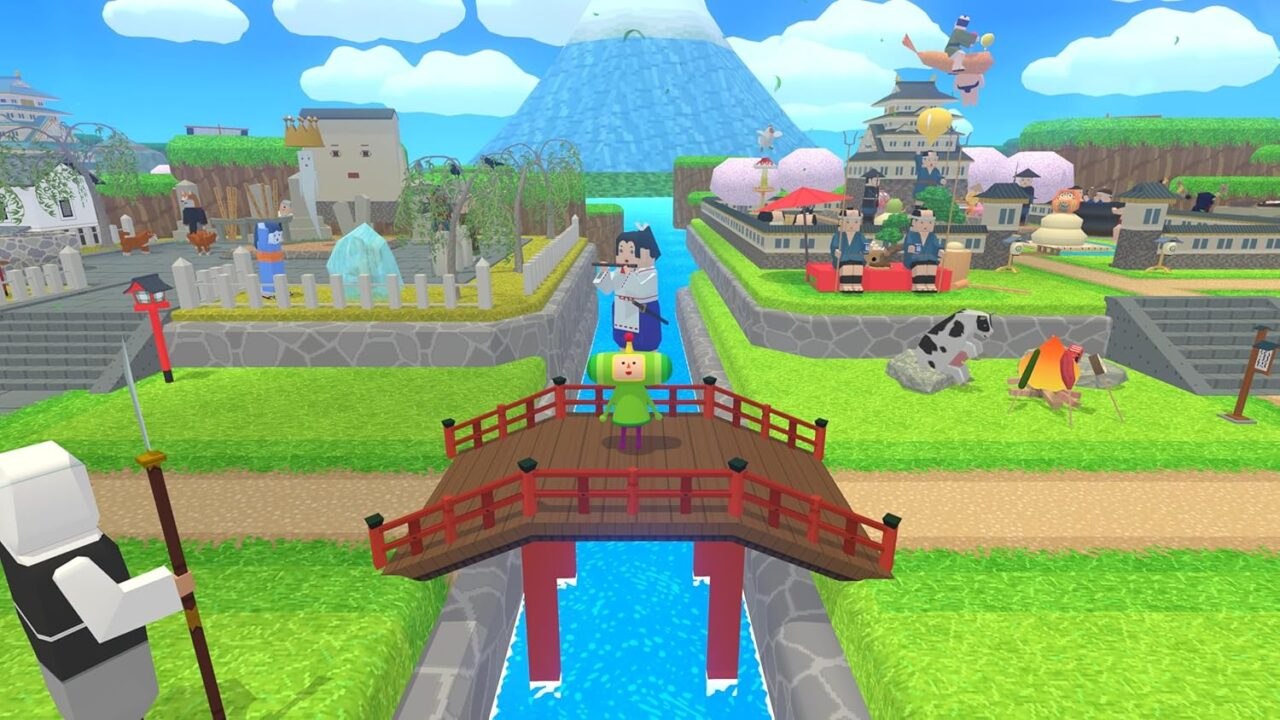
You start off in the Edo Era (Ancient Japan for those who slept during world history class..) and you’re tasked to take requests from the denizens of these times. The requests usually consists of rolling a katamari of a specific size, collecting only certain objects, but they can also get pretty unique like digging a hole, collecting 8 philosophers (that’s not in Edo Japan by the way…) , some old “favorites” return such as “Cow vs Bear” and roll to size “x” without a guide.
When the “roll across the eras” theming was revealed I was hoping to see a wide variety of environments, the game does deliver on that granting us 9 eras to roll in, but the distribution of the stages tend to heavily fall into the Edo Era. Fans of the series will also be familiar with Eternal Stages, locations where you can roll without the constraint of a timer and in Once Upon a Katamari, these stages only exist in…you guessed it, the Edo Era.
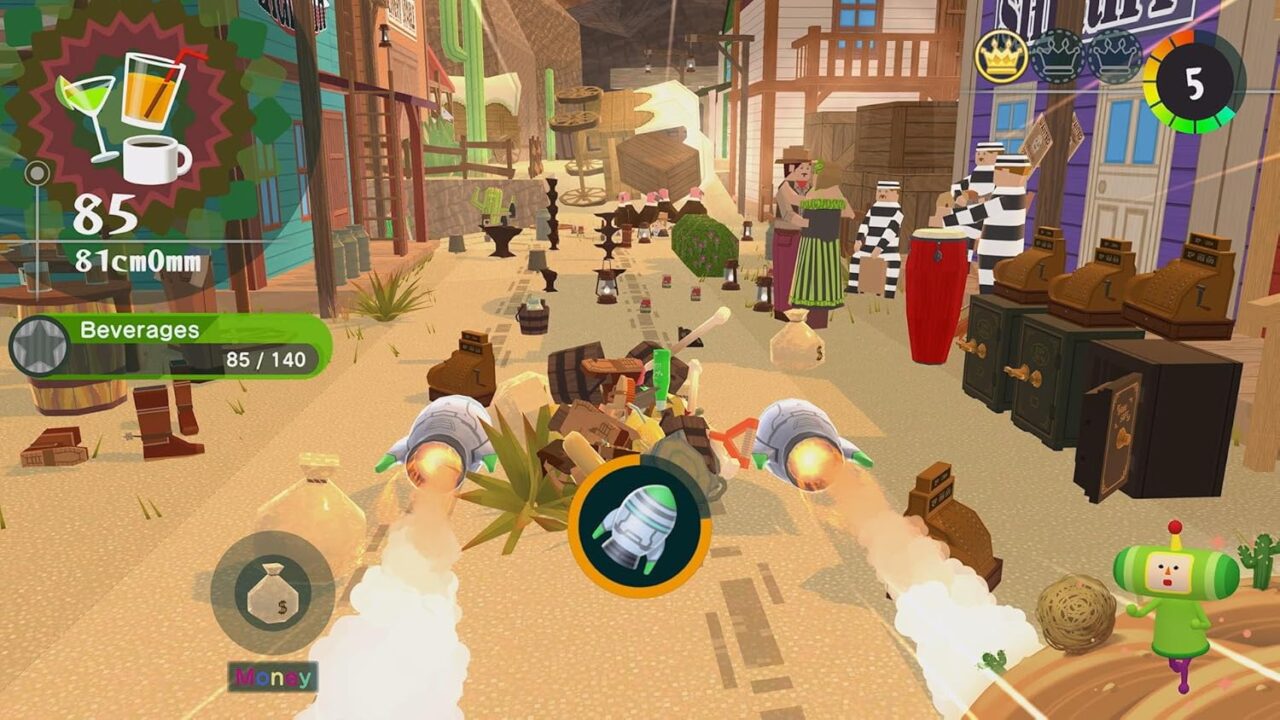
Visually the game doesn’t stray from the aesthetic established by series Keita Takahashi. It’s simple, with a dash of retro chic found in Japanese imagery of the last century. Although I have to admit seeing some of the human characters’ dead beady pixel eyes gave me some fright…which also had me questioning…do the human eyes in these games always look like this? The answer was yes…they did (at least in We Heart Katamari Reroll).
Once upon a Katamari didn’t coast on what had been built, added some new scenarios and called it the day. In fact the game actually snuck in some changes to the formula, particularly in the controls department. The series historically required dual analog controls, to mimic the feel of pushing a ball with both hands; this title finally offers users a simple control scheme. Which frankly for a title that is so whimsical, bright and colorful, I’m flabbergasted that this accommodation for younger players was never implemented.
The Prince Dash, another series mainstay, has an alternate means of triggering…rather than alternately flicking the analog sticks until you go in a burst of speed, you can trigger it instantly using a shoulder button. At first I felt this cheapened this much required mechanic…but after 10 plus hours of play I caved and exclusively used this new method…justifying it by reminding myself I’m doing this to prevent wear and tear on my controller.
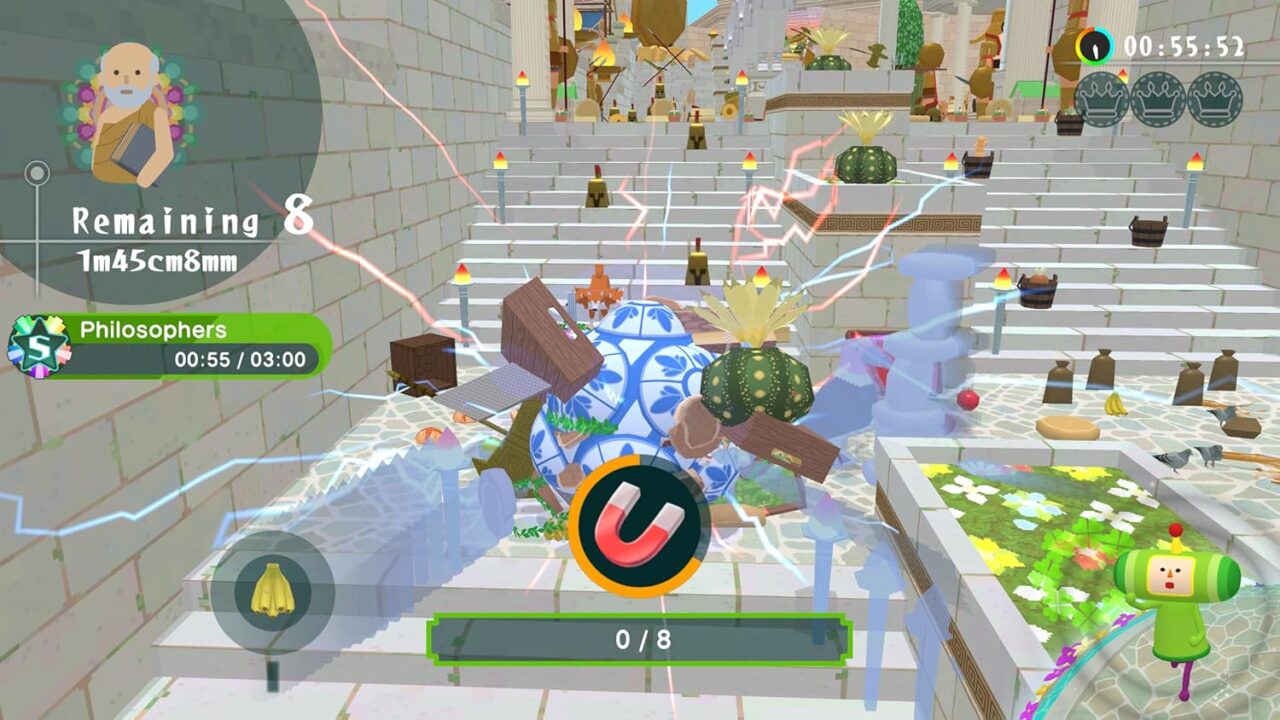
Another big W in the accessibility column is the addition of “freebies”, four items which can be used with various effects. Timer freezes the in-game timer and all activity on the field, making things that might elude your katamari a sitting duck. The Rocket gives you a speed burst for a limited time, perfect when you know your katamari is sizable to bowl over anything that you bump into. The Magnet which feels like a gamebreaker will attract objects that can stick to your katamari within a small radius. The Sonar helps you locate objectives, cousins presents and crowns. These items certainly will help you make sure you don’t earn the ire of the King by failing to accomplish the goals he set forth in each stage.
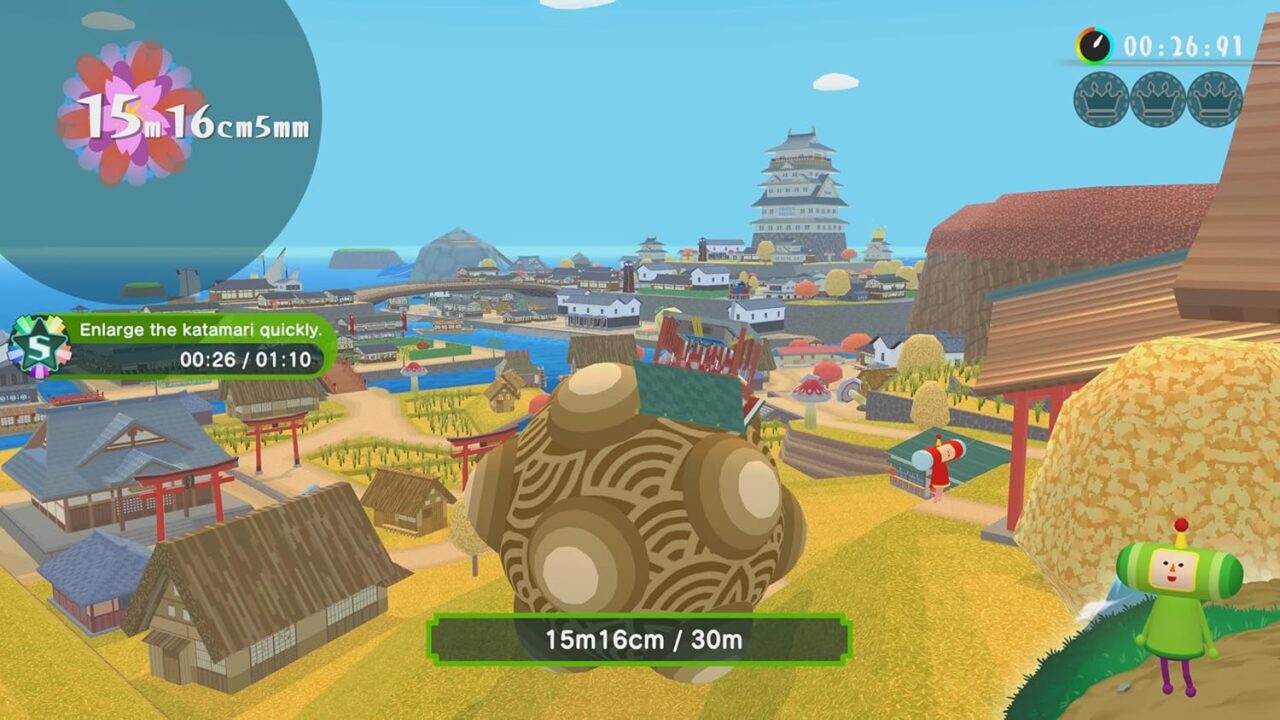
The game also adds another layer of replayability by including channels in most stages. These 3 tiers of challenges involve hitting a certain number of items attached to your katamari and these unlock after you’ve completed the stage the first time. The challenges aren’t particularly hard, but for stages with long run times you’ll wish you can complete multiple ones in one run.
Another change from previous games which I rather enjoy was giving the player a gauge of the requirements you need for obtaining the highest grade in the stage. It certainly helps me prioritize my time by letting me know if I need to just restart a run. However the par time required to earn a comet in each of the stages is still obfuscated.
Overall Once Upon a Katamari doesn’t stray from the game’s core formula and makes some concessions which smooths out some of the rougher edges of the gameplay. I might say having such a troublesome father might make me reconsider my loyalties, but how can you stay mad at that face! If you haven’t been on a roll in a while, this is a perfectly suitable entry to get back on the ball!
Note: Bandai Namco provided us with a code for review purposes.