
Also On: PlayStation, Xbox
Publisher: Bungie
Developer: Bungie
Medium: Digital
Players: Multi
Online: Yes
ESRB: T
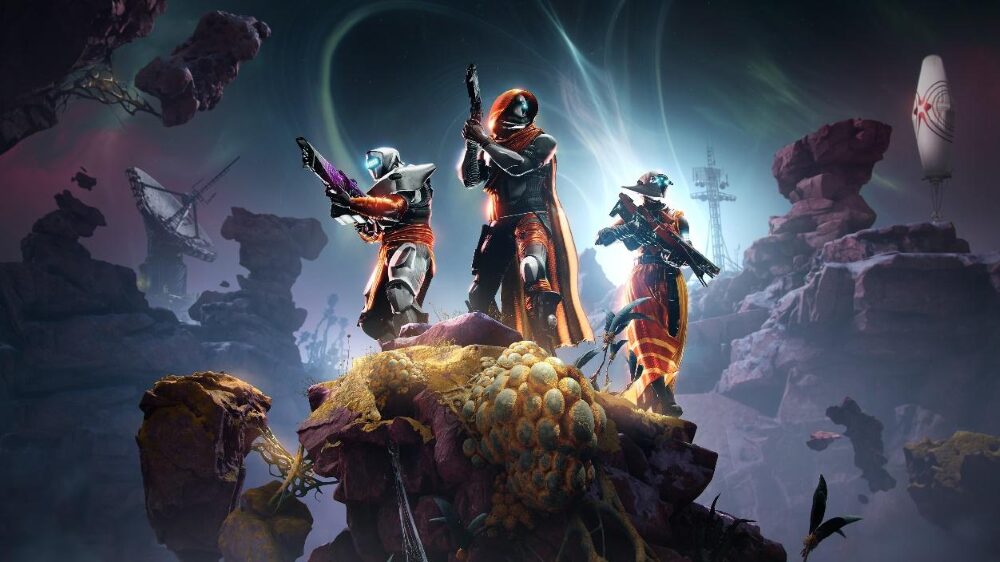
Destiny 2 is an ever evolving ecosystem of a game that always keeps me coming back for more, whether it be for the cooperative raids, insightful lore, or smooth-as-butter gunplay, there is always a reason to return to this iconic FPS, and the newly released The Edge of Fate expansion is no exception. Promising to act as a fresh start to the franchise, the expansion and its accompanying update give a much needed refresher to many of the game’s foundational systems, while also planting the seeds that will grow into a multi-year overarching story known as the Fate saga. This saga will explore and unravel the various lore-heavy enigmas of the Destiny universe, starting with the mysterious Nine, a group of incomprehensible beings that have been pulling the strings for as far back as basegame Destiny 1.
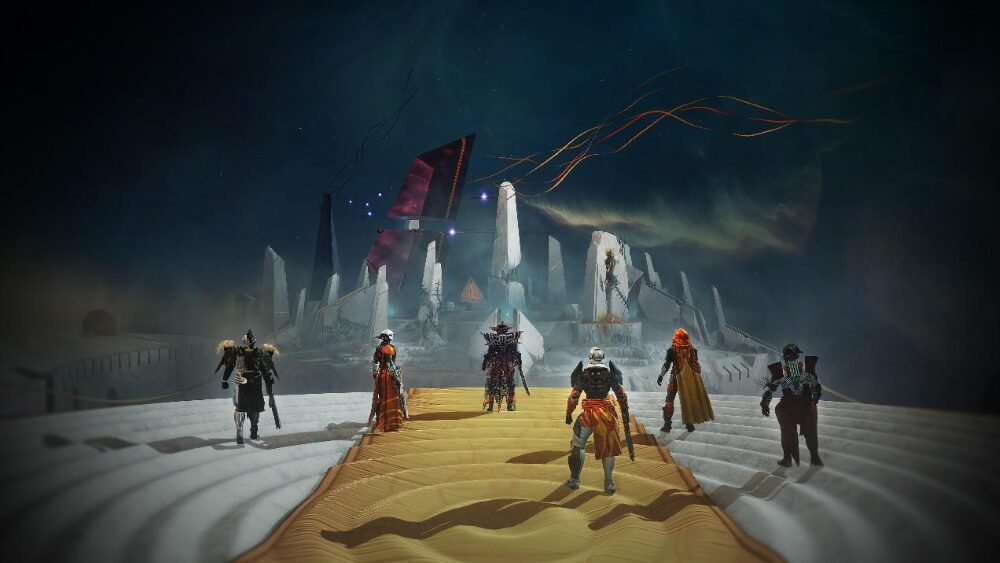
Weighing in at $39.99 this expansion presents a steep asking price, especially due to it being the first of two yearly releases. Compared to past expansions of similar content size (Beyond Light, Witch Queen) it offers slightly less in terms of content upfront but still maintains a high quality and production value. The main selling points of this expansion are its narrative campaign, a new destination called “Kepler”, and new weapon archetypes. In addition, you will also have access to narrative side quests, one new exotic quest and the introduction of “world tiers”. World tiers serve as an optional destination-wide difficulty and reward increase. This gives the destination and campaign a new level of replayability incentivizing you to come back to Kepler as your power increases to take on tougher and more rewarding quests.
As shown by the shortcomings of Lightfall and the smashing success of the Final Shape, the signifier of a great Destiny expansion is in its narrative. So does The Edge of Fate scratch that narrative itch? As a veteran of the franchise I can say, with confidence, that yes, the campaign for The Edge of Fate expansion proves to be one of the best written expansions in recent years. Importantly, we need to address the campaign in terms of both narrative and gameplay. The narrative of the campaign does something that the franchise hasn’t done in years, and that is “starting fresh”. While the campaign uses previously introduced characters, it uses them to tell a story that is fresh, new and full of mystery. The story can walk on its legs without the need of any supplemental material. You can show it to someone who has no knowledge on the series at all, and I am quite confident that they will walk out of the campaign having been told a satisfying first chapter to a greater story.
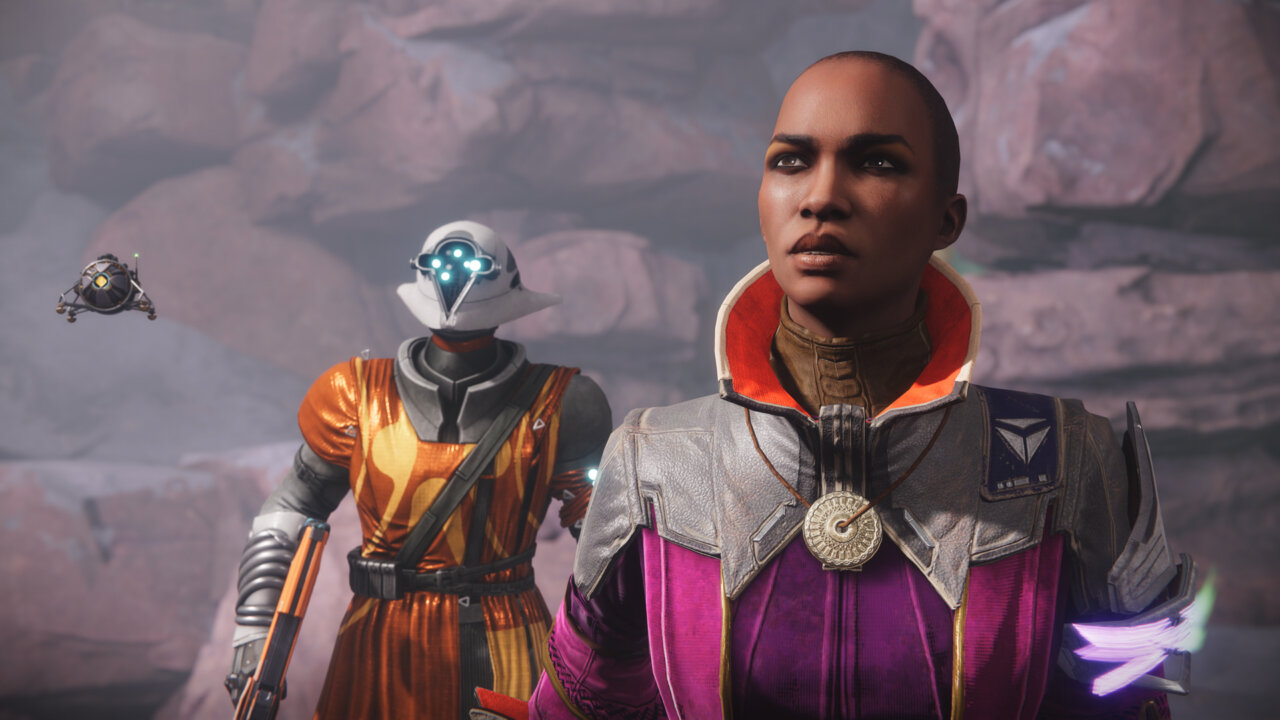
A prime example of this exceptional writing is Lodi, a new character introduced in The Edge of Fate. Lodi brings something much needed to the Destiny franchise: a fresh set of eyes. In a universe full of immortal warriors and eldritch alien gods, he makes his way not by defying the normal, but by appealing to it. From the minute we meet him it can be pieced together that he is a man out of time, far from home physically and temporally. Despite this he still does his best with the hand he is dealt, making his own fate, using skills that are unique to him, much like the player character does. We are as much of a mystery to him, as he is to us, and as the campaign goes on, those mysteries are slowly unwound revealing him to be a character that can only be described as one thing: “human”. His voice actor Brian Villalobos (@lobrocop) brings Lodi to life in such an immaculate way, flawlessly encompassing the spirit of a man who is in over his head but continues to push forwards despite all odds.
Moving on to the gameplay side of things, The Edge of Fate campaign seeks to be nonlinear and was often advertised as comparable to a “metroidvania” style game. While I can see where they are coming from, the campaign is still linear, albeit, often having you backtrack through areas you have already discovered. The campaign follows a formula of 2-3 short missions and then a longer mission. The short missions individually introduce an area of Kepler, and the long missions have you navigate through those areas again, but with them all connected. While this does give them campaign a seamless feel it also can feel a bit repetitive at times, especially where the next topic is concerned.
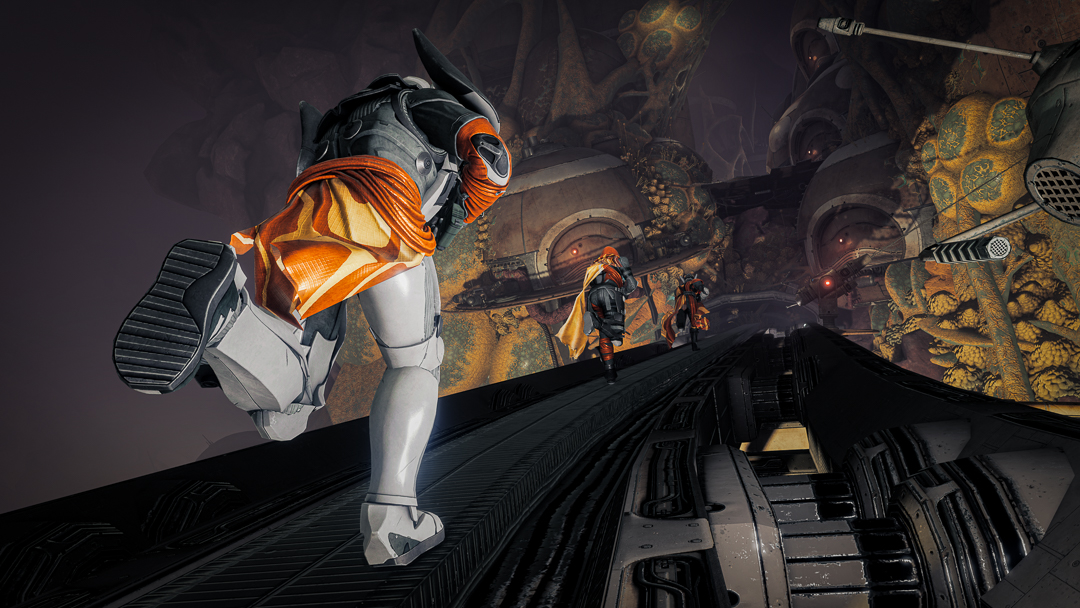
Another advertising point that ties in with the “metroidvania” aspect of the expansion are the destination abilities, of which there are four: Matterspark, Relocator Cannon, Mattermorph and Rosetta. Matterspark is the poster-child of the destination abilities, being used very often during the campaign and post-campaign content. To activate matterspark, you interact with pads placed around Kepler (later on you will gain the ability to activate it through your ghost menu). Once you activate matterspark your character will take the form of a small glowing orb, this allows you to navigate small areas such as pipes and vents. This form has a weak attack that can be used to charge pylons that interact with enemies or the environment. Relocator Cannon allows you to pick up a cannon from pedestals. While wielding the cannon you can shoot blue targets to link them to a nearby teleporter, going through the teleporter while holding the cannon will drop you through the blue target. This can be used to bypass bars and other obstructions such as laser grids.
Another ability, mattermorph, lets you interact with a fungal growth, after an animation your melee will be replaced with a throwable projectile. Hitting certain objects in the environment with this projectile will cause them to temporarily rearrange their position in the world. This can be used to bridge gaps or uncover hidden paths. The most simple of these abilities is Rosetta, it allows you to open doors using a terminal, it is upgraded periodically throughout the campaign and grants you access to the next areas of the campaign.
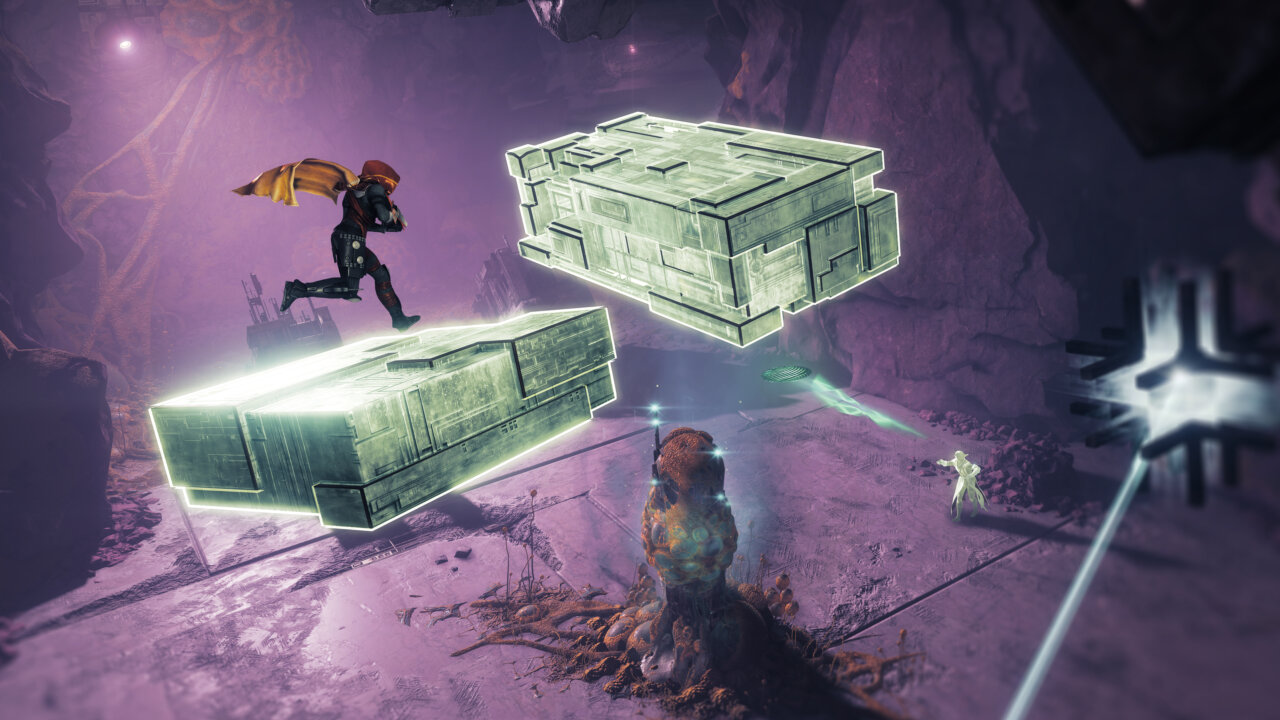
While these abilities are central to the fantasy and enjoyment of the campaign, they also feel a bit overused by the time you make it to the final mission of the campaign. I found myself letting out an audible sigh whenever I walked into a new room and realized I had to use mattermorph and matterspark to reveal and charge a pylon while taking fire from a horde of enemies. As far as criticisms go that is my only one. While overused, the abilities give a very fun spin on the traditional mechanics-light campaign, placing it somewhere between an exotic mission and a dungeon as far as complexity goes. The usage of the abilities in conjunction reminds me of the LEGO Star Wars video games I used to play when I was younger, and for that it gets my praise (which is quite ironic considering where Destiny is going next).
Many players seemed skeptical about the direction of the franchise following the end of the light and dark saga, but Bungie has proved that they are still capable of putting together an incredible foundational narrative along with a fun campaign to back it up. If you stepped away from Destiny following The Final Shape, this acts as an excellent point to hop back on. Overall, Destiny 2: The Edge of Fate is both narratively exceptional and mechanically above-average. While the pricing of the expansion may be a bit steep, if you play Destiny for the worldbuilding and narrative you will be amply satisfied by what the latest expansion has to offer.
Note: Bungie provided us with a Destiny 2: The Edge of Fate PC code for review purposes.